LinkedIn Advertising Agency for B2B
Decide whether LinkedIn fits your B2B market, what an agency should own, which route to take first, and how the work reaches a sales decision.
LinkedIn gives B2B advertisers unusually direct access to companies, roles and professional conversations. That does not make a LinkedIn campaign good by default.
The expensive failure is easy to recognize: the targeting looks precise, the clicks cost a lot, and sales still cannot tell who is worth pursuing.
Maestro builds LinkedIn and Meta campaigns around the people your sales team already wants to reach. We use your account and contact list, develop founder-led and problem-led ads, build the next step, and track the response through the CRM. The system uses CRM outcomes to help you make better commercial decisions.
This page will help you decide whether LinkedIn fits, whether an agency closes a real capability gap, what each team has to own, and what should happen before you spend more.
The quick answer
A good LinkedIn advertising agency should help you answer six questions before it scales a campaign:
- Are the companies and buying roles reachable in a usable audience?
- Is the problem specific enough to earn attention?
- Is there proof or expertise the buyer should trust?
- Is the next step right for the buyer's level of intent?
- Will a response reach the CRM and a named owner?
- Which sales outcome will cause the campaign to change?
If the answer to several of those is “we do not know,” the first job is repair. Launching more ads will only make the uncertainty more expensive.
Choose the path that matches your situation
| Your situation | Best first move | What must be true before launch |
|---|---|---|
| LinkedIn is already spending but sales distrusts the results. | Audit the audience, ads, destination and CRM stages. Keep, stop or repair each part. | Campaign history, CRM outcomes and someone who can explain how leads were handled. |
| You have enough site traffic, engaged viewers or another known audience to retarget. | Test a warm path around one buyer problem and one believable next step. | The audience is usable, the message matches why people know you, and follow-up has an owner. |
| You have little traffic but a credible named-account list. | Check the matched audience, then run a focused prospecting test if the usable size and economics make sense. | A clean list, clear buying roles, real proof and enough budget to learn. |
| You have both a usable warm audience and a strong target list. | Run distinct warm and prospecting tests when the budget can answer both questions. | Separate audiences, messages, destinations and reporting. |
| You lack a target list, proof, an offer worth the buyer's time or sales follow-up. | Fix the missing foundation before media. | A named owner and a concrete repair plan. |
These are different campaign jobs. A retargeting ad should not be judged like a cold account-list ad. A document download should not be judged like a demo request. A form fill should not be reported as a qualified meeting.
Is LinkedIn right for your B2B company?
LinkedIn is more likely to fit when professional identity helps you find the market and the economics can support a considered buying process.
Strong fit
- You can name the companies, functions and buying roles that matter.
- The problem is expensive, urgent or politically difficult enough to earn attention.
- The deal value can support paid acquisition and a longer sales cycle.
- Your team has expertise, product proof, customer evidence or a resource that helps the buyer complete a real task.
- Sales will follow up and report which responses became real conversations.
- You can fund a test long enough to make a campaign decision.
Possible fit, but fix this first
- The list exists, but matchable fields and audience size are unknown.
- The offer is credible, but the message still sounds like a product category.
- The ads are ready, but the page or Lead Gen Form breaks the promise.
- The CRM captures a lead, but no one records held and qualified meetings.
- The founder has strong ideas, but no repeatable way to turn them into approved creative.
Weak fit right now
- “Anyone in B2B” is the audience.
- The product needs a long explanation before the buyer can recognize the problem.
- The only available proof is an unverified result or a generic product claim.
- Nobody owns lead response.
- The test has to prove revenue in a few weeks.
- The buying economics cannot support Maestro's current $10,000-per-month total-media fit threshold.
That last number is Maestro's public offer filter across paid media. It is not a universal LinkedIn minimum and it is not a published LinkedIn-only package.
Should you hire an agency or keep LinkedIn ads in house?
Hire an agency when it closes real operating gaps. Keep the work in house when your team already owns the complete system and can improve it without another layer.
| Capability | Keep it in house when… | An agency may help when… |
|---|---|---|
| Audience design | Your team can turn sales priorities into testable account and role groups. | Campaigns use broad titles, stale lists or audiences nobody has validated. |
| Creative strategy | You can regularly turn buyer questions and executive expertise into clear ads. | Creative is an occasional design request or a feature dump. |
| Production | You have people who can ship video, static, document and post-based creative. | Good ideas stall between the founder, marketer and designer. |
| Destination | Your forms, resources and pages keep the ad's promise. | Every campaign lands on a generic page or overbuilt form. |
| Measurement | Platform diagnostics reconcile with CRM stages and sales feedback. | Reporting stops at clicks, leads or booked meetings. |
| Decision cadence | A named owner makes keep, repair, stop or fund decisions. | Work continues because nobody can say what the test proved. |
Ask a prospective LinkedIn ads agency to show how it handles those six capabilities. Then ask what your team still has to supply. “Done for you” hides the operating model if the agency still needs your target market, expertise, proof, approvals and sales follow-up.
What Maestro owns, what you own and what is shared
If your campaign starts with a named sales list, use our account-based marketing agency scope guide to separate campaign delivery from account selection, sales follow-up, and CRM ownership.
The exact scope still needs an agreement. The current public offer supports this working split:
| Maestro owns | Your team owns | Shared decision |
|---|---|---|
| Audience design and match checks from the supplied list. | The target account/contact list and buying-role priorities. | Which segment is large and important enough to test. |
| Turning approved source material into paid-media concepts and assets. | Executive point of view, product truth, permitted proof and approvals. | Which message is strong enough to publish. |
| Campaign build, tracking plan and delivery monitoring. | Account access, privacy/compliance decisions and timely access to systems. | What can be measured and returned safely. |
| Landing-path recommendations and agreed builds/tests. | Offer facts, fulfillment capacity and any internal legal review. | Lead Gen Form, resource, page or booking path. |
| Campaign reporting connected to agreed CRM outcomes. | Qualification rules, lead disposition and sales follow-up. | What counts as a qualified meeting and what happens next. |
| Iteration and an end-of-engagement operating handoff. | Approvals and the people who will use the system after handoff. | Continue, expand, repair or stop. |
Do not assume a LinkedIn-only package, a fixed agency fee, a channel budget split, unlimited creative, full ghostwriting, original research, outbound follow-up or deep RevOps implementation. Those are scope questions until agreed.
The complete LinkedIn campaign system
Judge the complete path from a market choice to a sales decision, not the ad in isolation.
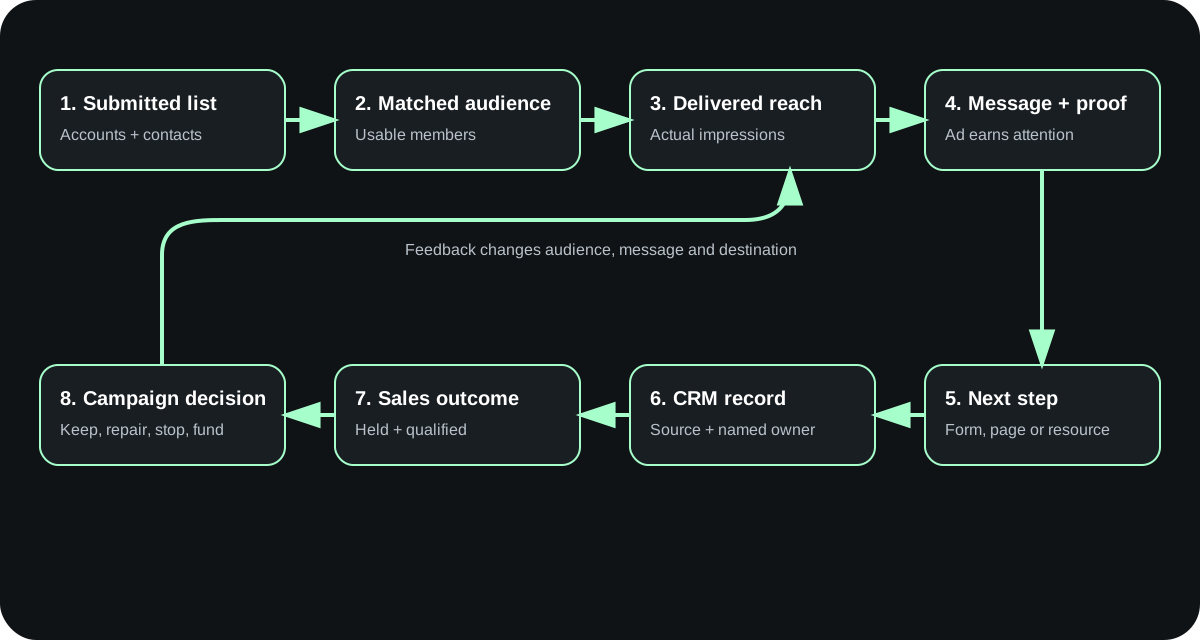
Every arrow can fail.
A spreadsheet can contain 5,000 contacts while the usable matched audience is much smaller. A matched member may never receive an impression. A click may never become a form. A booking may not be held. A held meeting may be outside the ICP. An opportunity may exist without being caused solely by one ad.
That is why the report needs separate rows for each state.
One worked campaign decision
Imagine a B2B software company that sells a $75,000 platform to finance leaders. It has a credible list of 700 target accounts, little website traffic, an executive who can explain why approval handoffs fail, and a sales team that already works named accounts.
First, ask whether you can build enough usable reach around the buying committee to test one important belief.
| Step | Provisional choice | Evidence needed | Decision owner |
|---|---|---|---|
| Market | Finance leaders at the 700 named accounts. | Clean company/contact fields and priority tiers. | Client sales and marketing. |
| Audience | Upload and inspect the usable matched audience. | Match diagnostics and estimated usable size. | Maestro with client access. |
| Message | Approval delays create hidden cash and forecasting problems. | Executive explanation, product truth and approved proof. | Shared. |
| Creative | Executive post plus a short product demonstration. | Approved post, full product path and truthful claims. | Shared. |
| Next step | A practical approval-workflow teardown, not an immediate demo. | Finished resource or review process and delivery owner. | Client with Maestro support. |
| Capture | Form records the account, role, problem and source. | Tested form-to-CRM delivery. | Maestro and RevOps owner. |
| Sales outcome | Held meeting that fits the account and problem rules. | Dated CRM disposition from sales. | Client sales. |
| Next campaign decision | Fund the segment, repair the message/path, or stop. | Audience, delivery, response and sales-quality evidence together. | Shared review. |
If the audience is unusable, the test stops or changes. If the audience delivers but nobody engages, inspect message and proof. If people respond but do not fit, inspect the offer, form and qualification. If qualified meetings appear but opportunities do not, inspect sales discovery and product fit before blaming the ad.
Four LinkedIn ad examples tied to agency decisions
These are public LinkedIn Ad Library records, not Maestro client work. They show choices a team can inspect. They do not prove campaign performance.
1. Kong: give the executive a point of view buyers can apply
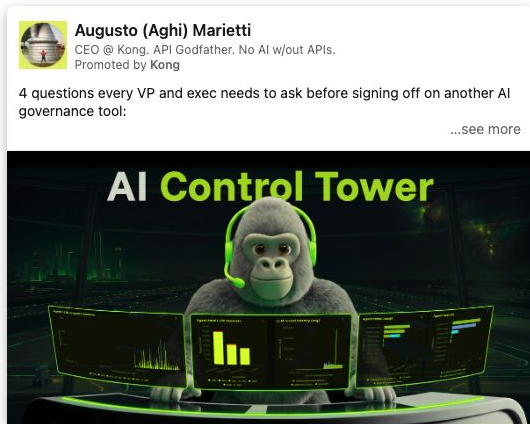 Member identity plus Promoted by Kong
 Sponsored post creative
Read the captured opening and source limits
Opening: 4 questions every VP and exec needs to ask before signing off on another AI governance tool:
Source limit: The card does not show the authorization workflow, targeting, paid-only reach, spend or outcomes; the enterprise claim is advertiser copy.
Public source: LinkedIn Ad Library 1597958026 Observed format: Single Image Thought Leader Ad from Kong CEO Augusto Marietti, promoted by Kong Agency decision: Does the client have a credible point of view and a person willing to own it?
The post gives executives four questions to ask before buying another AI governance tool. A buyer can apply the questions before accepting Kong's product argument.
What to borrow:
- Start with an evaluation framework a buyer can use.
- Make the author and sponsor relationship visible.
- Let the executive's expertise do more work than a corporate claim.
What the example cannot tell us: the approval process, audience settings, incremental reach, spend or business outcome. “Hundreds of enterprises” is the advertiser's claim.
2. Snowflake: show enough of the document to earn the response
 Full sponsored card
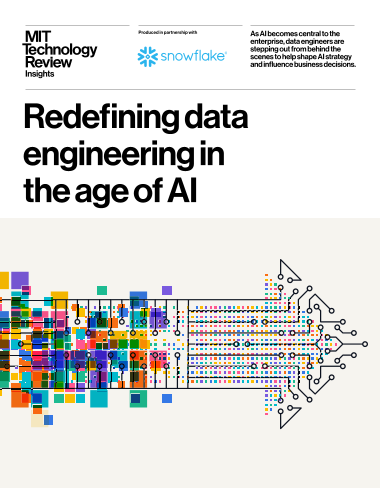 Cover
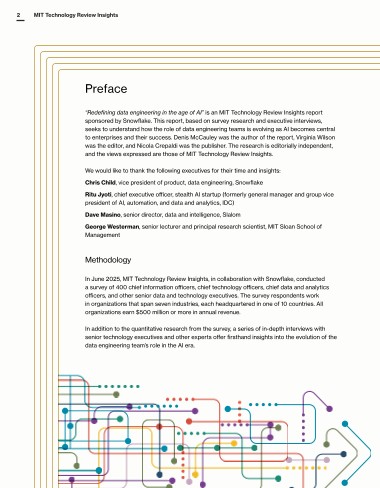 Contributors and methodology
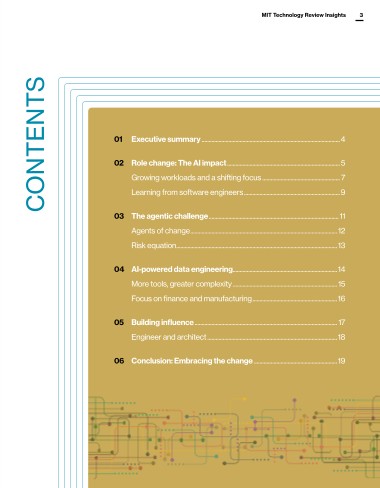 Contents
Read the captured opening and source limits
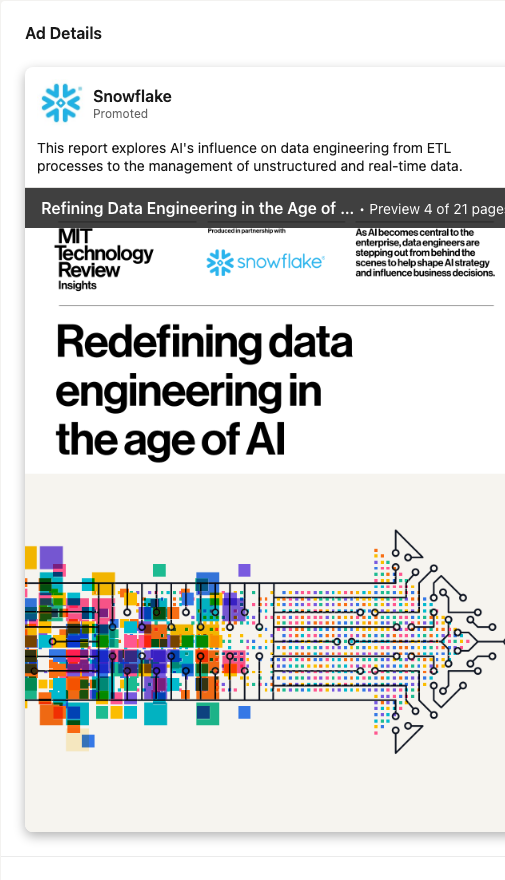
Opening: This report explores AI's influence on data engineering from ETL processes to the management of unstructured and real-time data.
Source limit: Only the first three archived preview pages were inspected. Gate settings, the full report, targeting, delivery and results are unknown.
Public source: LinkedIn Ad Library 1556453506 Observed format: Document Ad Agency decision: Is the resource substantial enough to deserve a form fill or click?
The first three archived pages establish the topic, the MIT Technology Review Insights relationship, contributors, methodology and contents. The report starts proving its value before the reader reaches the executive summary.
What to borrow:
- Put the actual resource in the ad instead of using a decorative cover.
- Use the preview to establish depth and credibility.
- Make the document earn attention through its contents, methodology or examples instead of a vague “ultimate guide” label.
What the example cannot tell us: the full report quality, gating settings, lead quality, targeting or results.
3. Atlassian: use a walkthrough when the product is the proof
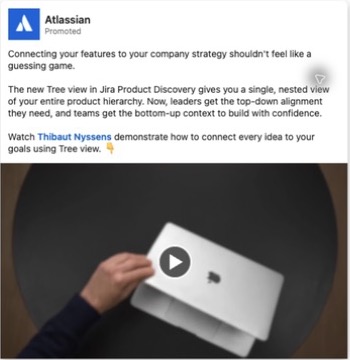 Strategy diagram
Read the captured opening and source limits
Opening: Connecting your features to your company strategy shouldn't feel like a guessing game.
Source limit: The creative does not establish retention, adoption, targeting or lift, and the saved evidence does not establish a member-post sponsorship.
Public source: LinkedIn Ad Library 1537655886 Observed format: 98-second video demonstration Agency decision: Will a product walkthrough resolve a buyer question better than another claim?
Atlassian starts with a strategy-alignment problem, moves to a product hierarchy diagram, and then shows the Tree view in Jira Product Discovery.
What to borrow:
- Open with the work problem, not the interface.
- Use a diagram to explain the mental model.
- Show the complete action in the product.
- Keep the video long enough to teach, then cut shorter versions for narrower jobs.
What the example cannot tell us: retention, product adoption, targeting or lift.
4. Datadog: keep the promise intact after the click
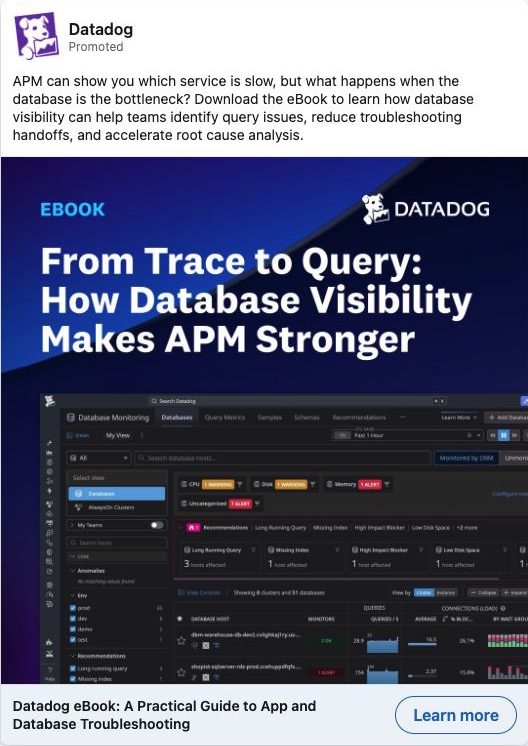 Full ad card
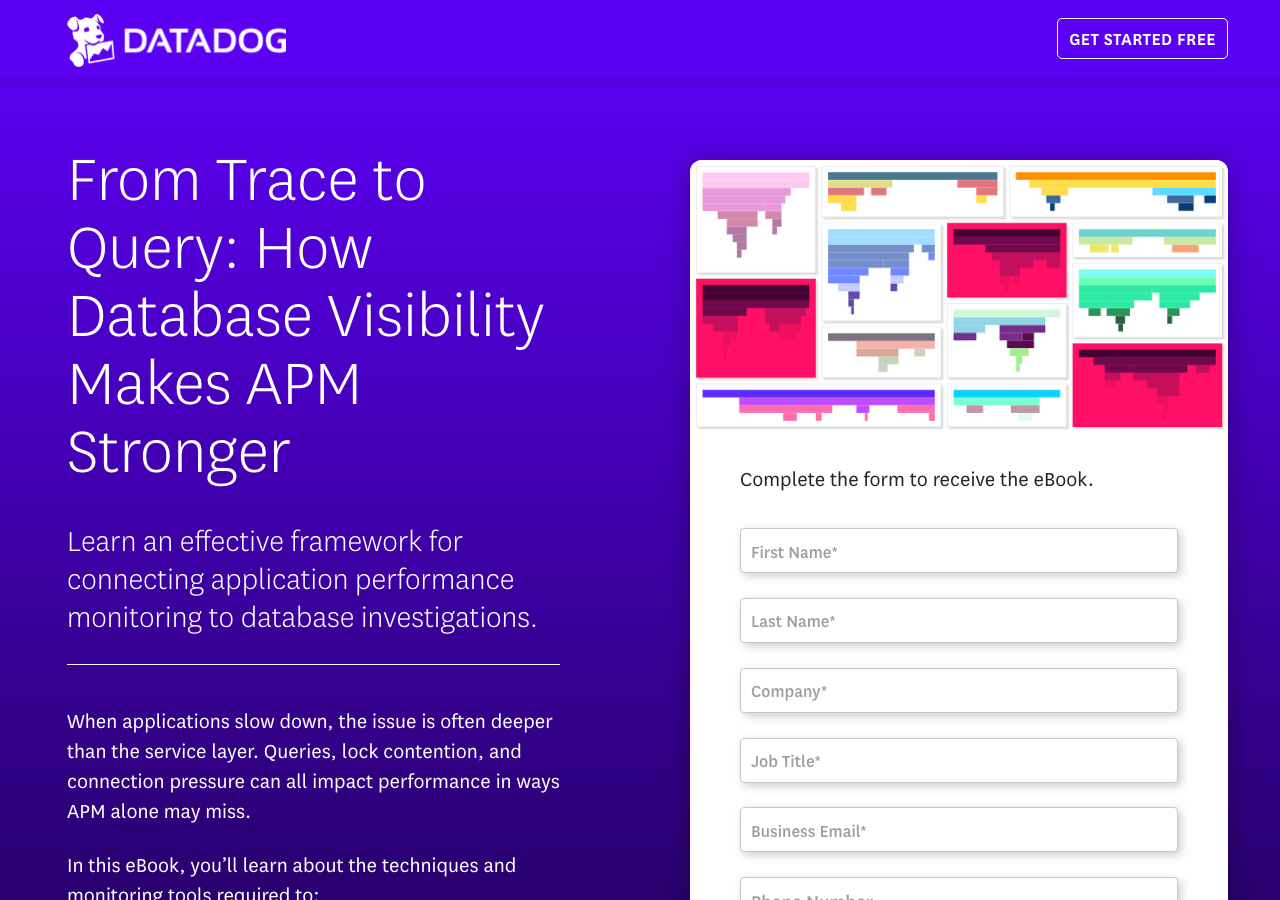 Desktop destination and form
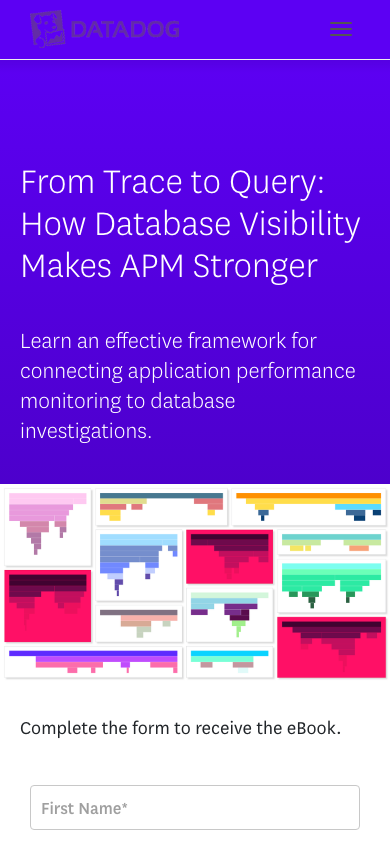 Mobile destination and form
Read the captured opening and source limits
Opening: APM can show you which service is slow, but what happens when the database is the bottleneck?
Source limit: The captures do not establish form conversion, lead scoring, delivery, CRM routing, sales response or results.
Public source: LinkedIn Ad Library 1591512726 Observed format: Single Image Ad leading to an ebook page Agency decision: Does the destination continue the exact problem, and is the form proportionate?
The ad asks what happens when the database is the bottleneck. The destination continues with “From Trace to Query” and explains the same troubleshooting problem. It then asks for name, company, job title, business email and phone.
What to borrow:
- Repeat the core problem and asset on the page.
- Treat the form as a qualification and friction choice.
- Test the mobile page, not only the desktop design.
What the example cannot tell us: completion rate, lead scoring, delivery, CRM routing, sales response or results.
Four more patterns worth inspecting
Inspect Siemens Infrastructure evidence
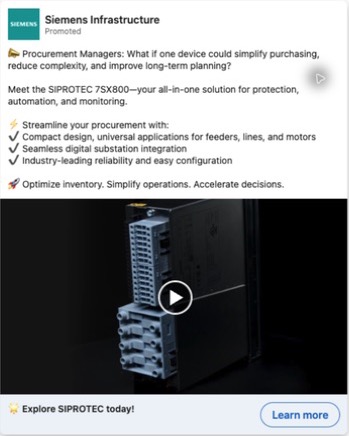 Full sponsored card
Read the captured opening and source limits
Opening: Procurement Managers: What if one device could simplify purchasing, reduce complexity, and improve long-term planning?
Source limit: The copy does not prove the actual targeting, delivered audience, qualified demand, product performance or campaign results.
Inspect Notion / Jenna Potter evidence
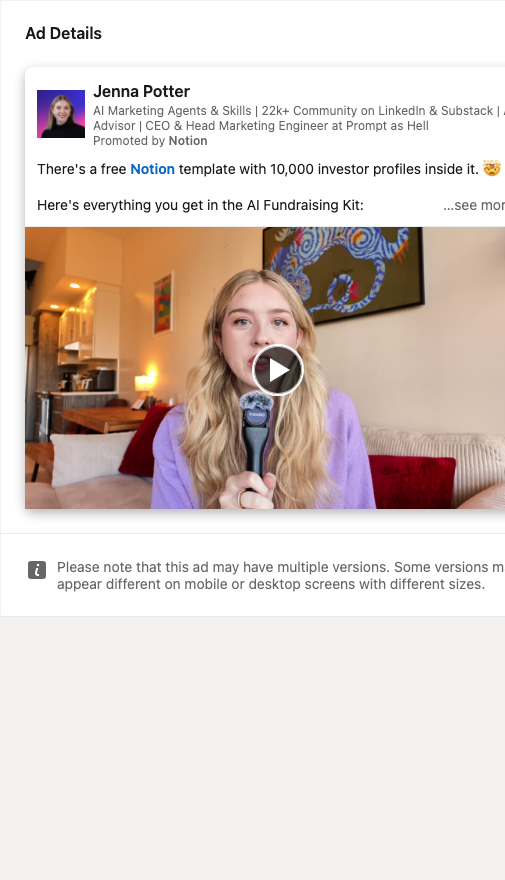 Full author-and-sponsor card
Read the captured opening and source limits
Opening: There's a free Notion template with 10,000 investor profiles inside it.
Source limit: The saved evidence does not establish delivery mechanics, downstream qualification or performance.
Inspect monday.com / Nicole Ramirez evidence
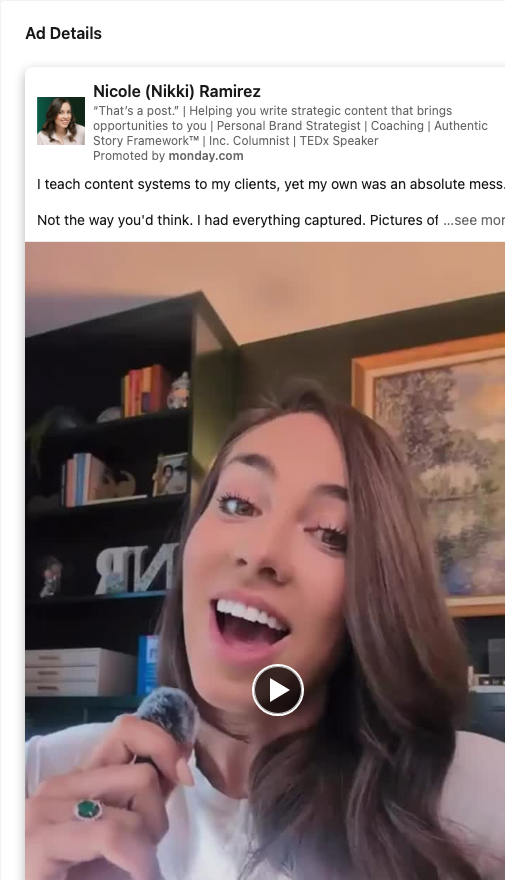 Full author-and-sponsor card
Read the captured opening and source limits
Opening: I teach content systems to my clients, yet my own was an absolute mess.
Source limit: The creative does not establish audience targeting, destination quality, lead quality or campaign performance.
Inspect Qualified / Piper evidence
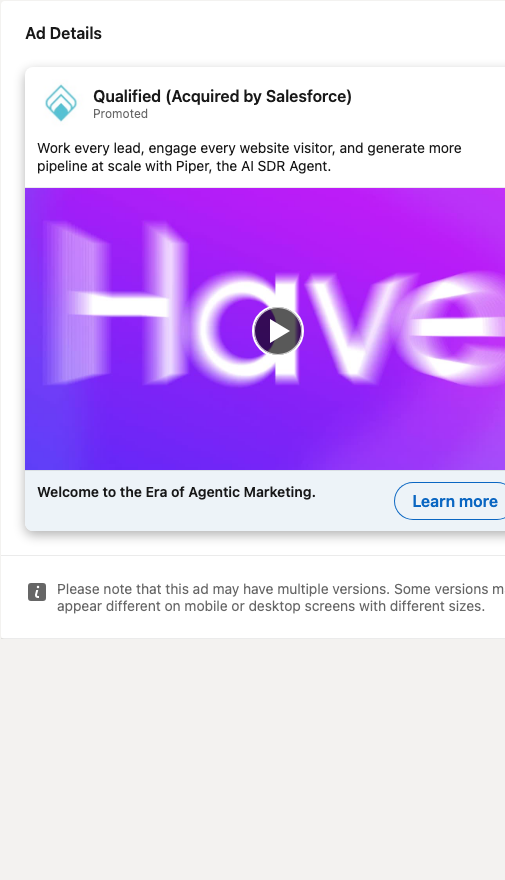 Full sponsored card
Read the captured opening and source limits
Opening: Work every lead, engage every website visitor, and generate more pipeline at scale with Piper, the AI SDR Agent.
Source limit: The video does not show CRM creation, qualification rules, follow-up, attendance, pipeline or closed-loop optimization.
| Example | Decision it illustrates | One thing to borrow | What it cannot prove |
|---|---|---|---|
| Siemens Infrastructure | Whether the message names a real buying role and problem. | Address procurement complexity as a purchasing and planning problem, then show the product. | Actual targeting, delivery, qualified demand or performance. |
| Notion and Jenna Potter | Whether the buyer can see what the offer contains. | Open on the fundraising kit and demonstrate one working prompt before asking for action. | Delivery, qualification or results. |
| monday.com and Nicole Ramirez | Whether client expertise can become a credible before-and-after story. | Explain why the old system survived, then show the categories, ownership and team handoff. | Audience settings, destination, lead quality or results. |
| Qualified and Piper | Whether the team has designed the handoff after an interested visit. | Show the conversation reaching a meeting choice and name who owns the next step. | CRM creation, qualification rules, follow-up, attendance or pipeline. |
For deeper production detail, use the guides to LinkedIn video ad examples, Thought Leader Ads, LinkedIn Document Ads, B2B ad examples and B2B landing page examples.
Submitted list, matched audience and delivered reach are different
LinkedIn's product term is Matched Audiences. It describes custom-audience capabilities. It does not promise that every record you submit will match or that every matched member will see an ad.
Keep these numbers separate:
- Submitted records: contacts or companies sent for matching.
- Usable matched audience: the audience LinkedIn makes available after processing and eligibility checks.
- Delivered reach: members who actually received an impression in the reporting period.
- Response: click, form submission, resource request or other recorded action.
- Identified CRM record: a person or account attached to a known response, when the path permits it.
A member who received an impression is not automatically identified by name. An account-level delivery report is not proof that a specific contact saw the ad. A campaign should use the strongest available evidence without pretending it is person-level certainty.
Lead Gen Form, landing page, resource or booking page?
Choose the destination by the buyer's job, not by which asset is easiest to build.
| Next step | Use it when | Main risk | What to verify |
|---|---|---|---|
| LinkedIn Lead Gen Form | The request is simple and reducing form friction matters. | Easy submission can create low-context leads. | Fields, consent, CRM delivery, confirmation and owner. |
| Landing page | The buyer needs more proof or a tailored explanation. | Message breaks between ad and page. | Mobile speed, promise continuity, form, source capture. |
| Resource or template | The buyer has a problem but is not ready for sales. | A download gets mislabeled as demand. | Delivery, usefulness, qualification and follow-up. |
| Booking page | Intent is strong and the meeting offer is clear. | Cold buyers are asked for too much too soon. | Qualification, calendar routing, confirmation and no-show process. |
| Product or interactive demo | Seeing the workflow resolves the buying question. | A generic tour adds no proof. | Exact task, usable path and next action. |
The response path needs five explicit steps:
- The buyer asks for something.
- The system confirms or delivers it.
- The CRM records the source and relevant answers.
- A named person owns the next action.
- Sales records what happened in language marketing can use.
What counts as a result?
LinkedIn's Insight Tag and conversion tracking support website measurement. LinkedIn also documents ways to provide conversion data through its APIs. Those capabilities do not make attribution perfect, and they do not prove every CRM event will match back to the platform.
Use a measurement chain that keeps diagnostics and commercial outcomes separate.
| Stage | What it means | What it does not mean |
|---|---|---|
| Impression/reach | The campaign delivered. | The right named person paid attention. |
| Click or engagement | The ad earned an action. | The person fits or wants to buy. |
| Form/resource request | The person asked for the stated next step. | The person requested a sales conversation. |
| Booking | A meeting entered the calendar. | The meeting happened. |
| Held meeting | The conversation occurred. | The account and problem fit. |
| Qualified meeting | The agreed account, role, problem and timing rules were met. | An opportunity exists. |
| Opportunity | Sales accepted a real commercial process. | The ad caused the whole opportunity. |
| Pipeline/revenue | The CRM records commercial value. | One platform deserves all credit. |
CTR, CPC and CPL help diagnose delivery and response. They should not overrule sales-quality evidence.
At each review, ask:
- Did the intended audience become usable and receive delivery?
- Which message and proof earned qualified attention?
- Did the destination keep the promise?
- Did requests reach the CRM with enough context?
- Did sales respond and record the outcome?
- What should we keep, repair, stop or fund next?
What should happen in the first 90 days?
Days 1–14: make the system launchable
The public Maestro offer describes a 14-day launch goal when the inputs are ready. It depends on list quality, access, tracking, approvals and executive material.
- Confirm fit, scope and the first campaign question.
- Audit the account and CRM path if campaigns already exist.
- Clean the target list and check audience usability.
- Agree the message, proof, destination and qualification rule.
- Build and test the campaign, tracking and response handoff.
- Hold the launch when a critical owner or fact is missing.
Days 15–45: learn from delivery and response
- Check usable audience and delivered reach before judging the message.
- Review the full ad, not only the hook or thumbnail.
- Test the form or page on desktop and mobile.
- Read actual sales dispositions, including rejected leads.
- Change one important decision at a time when possible.
Days 46–90: improve the system and decide what deserves more budget
- Expand a segment only when delivery and quality support it.
- Turn winning source material into new angles and formats.
- Repair or stop paths that create activity without held and qualified sales conversations.
- Document the audience, creative, destination and reporting system.
- Hand over the created operating assets at the end of the engagement.
Continued management and the exact handoff scope must be agreed. A 90-day operating period is not a promise of 90-day revenue.
LinkedIn ads agency pricing: what is known and what still needs scoping
Maestro's public fit criterion is at least $10,000 per month in total media. That amount can span LinkedIn and Meta. It is not a published LinkedIn-only budget.
Keep four costs separate:
- media paid to the platforms;
- agency strategy and management fees;
- creative, landing-page or resource production outside the agreed scope;
- data, enrichment, software and integration costs.
Maestro does not currently publish a LinkedIn ads management fee or fixed LinkedIn-only package on the site. A proposal should state each cost, what is included, who owns the work and which assumption changes the price.
Comparing providers? Use the LinkedIn ads agency comparison and proposal worksheet to compare production, management, CRM responsibilities, and public pricing.
Compare the same month of work
Before comparing fees, give each agency the same sample month: the channels, number of new concepts, video and image formats, landing pages, and CRM work you need. Ask each agency to mark those items as included, client-owned, or separately priced. A lower management fee can leave your team with more production work.
Use the LinkedIn ads cost guide to separate media assumptions from the agency fee. If you already have campaigns running, bring the findings from the LinkedIn ads audit so the proposal addresses the actual gaps. If production is the main gap, define the workload with the creative partner specification before asking for a quote.
LinkedIn Ads Agency Readiness Kit
Open the fictional example to see the required detail. Then complete the blank brief and give it to the standalone review prompt. The output should return separate draft and launch decisions, the right first route, missing owners and the evidence required to proceed.
Copy the complete readiness prompt
The full decision rules and output format are included, so the prompt works away from this page.
You are reviewing a B2B LinkedIn advertising readiness brief. Your job is to help the team decide whether to launch, fix the foundations first, or hold. Do not reward completeness of writing. Judge whether the campaign system can work and whether the facts support launch.

I will paste a completed brief after these instructions.

Reference summary: a viable LinkedIn campaign needs a defined market, a usable audience source, a specific buyer problem, permitted proof, a proportionate next step, a tested response path, a named sales owner, commercial approval and a review decision. The article that explains this framework is https://maestrogtm.com/linkedin-ads-agency/. The prompt must still work if that page is unavailable.

The readiness brief should supply: business fit; first campaign job; audience source and usability; buyer problem and proof; creative and offer; destination and response path; qualification and CRM feedback; costs and scope; first review and stop rules. A completed fictional example may be supplied for format reference, but its market, facts, owners and decisions must never be copied into the user's brief.

Rules:
1. Do not invent audience size, match rate, reach, proof, budget, agency fee, scope, sales capacity, attribution or results.
2. Separate Draft Readiness from Launch Readiness. A coherent provisional campaign can be drafted while final URLs, creative or commercials are pending. Launch requires working delivery evidence, owners and approval.
3. Keep these states separate: submitted records; usable matched audience; delivered reach; response; identified CRM record; booking; held meeting; qualified meeting; opportunity; pipeline/revenue.
4. A download or form fill is not automatically a demo request or qualified meeting.
5. Platform-attributed conversions and observed CRM outcomes must remain separate.
6. If a claim depends on missing proof, mark the claim unavailable. Do not rewrite it into fabricated evidence.
7. If a required owner is missing, name the owner role the team needs. Do not pretend the agency can silently absorb client or sales work.
8. Treat media, agency fee, outside production and data/software/integration costs as separate.
9. A submitted list does not establish a matched audience; a matched audience does not establish delivery; account-level delivery does not identify a named viewer.
10. If the brief asks for automatic CRM optimization, require the supported event, permissions, mapping, deduplication and live test receipt. Otherwise recommend human review of CRM outcomes.

Required checks:
- Channel fit: market, economics, buying process and internal capacity.
- First campaign job: one primary question and a path suited to warm demand, named-account prospecting, both, or repair.
- Audience: source, fields, exclusions, usable status and owner.
- Message and proof: specific problem, truthful evidence, source owner and approval owner.
- Creative: what the buyer will actually see and why the format helps.
- Destination: promise continuity, fields, delivery/confirmation and mobile path.
- CRM/sales: source fields, named next owner, response time, qualification, rejection reasons and review cadence.
- Economics/scope: separate costs, responsibilities, exclusions and commercial approval.
- Test logic: evidence to keep, repair, stop or fund the next phase.

Override conditions:
- Choose HOLD when the market/audience source, buyer problem, permitted proof, offer/fulfillment, basic economics or sales ownership is absent or unsupported.
- Choose FIX FIRST when the core thesis is credible but audience usability, assets, response delivery, tracking, owners, commercials or approval are incomplete.
- Choose LAUNCH only when every launch-critical item has evidence, a named owner and approval. A planned test is not evidence that the path works.

Return exactly these sections:

## Decision
- Draft readiness: Ready / Needs work / Hold
- Launch readiness: Launch / Fix first / Hold
- One-sentence reason

## Campaign path
- Recommended first route: Existing-campaign repair / Warm demand / Named-account prospecting / Deliberate combined test / Foundations first
- Primary test question
- Why this route fits the supplied evidence

## Readiness table
Create a table with: Area | Ready evidence | Missing or risky | Required action | Owner | Evidence that closes it.

## Measurement chain
List each state from submitted list through pipeline. For every applicable state, give the exact definition, data source and owner. Mark unsupported states Unknown.

## Keep, repair and stop rules
Give three concrete decision rules tied to the brief's evidence. Do not create numerical thresholds that the brief does not supply.

## Next five actions
Order the actions by dependency. Every action must have one owner and one acceptance check.

## Claims and assumptions to remove
List anything that is unsupported, conflated or written as fact without evidence. If none, say None.

Completed brief begins below:
Use the LinkedIn Ads Agency Readiness Brief
The readiness brief turns this page into a working decision.
- Open the blank readiness brief.
- Fill in the market, audience source, proof, next step, CRM path, owners and known costs.
- Compare your inputs with the completed fictional example.
- Paste your completed brief into the standalone review prompt.
- Use the result to choose launch, fix first or hold, with a named next owner.
The prompt is designed to stop when a required fact is missing. It should not invent audience size, proof, budget, sales capacity or results.
Questions to ask any LinkedIn advertising agency
- How will you decide whether LinkedIn fits before recommending more spend?
- How do you separate submitted lists, matched audiences and delivered reach?
- What work do you expect from our executives, marketing team and sales team?
- Can you show the complete ad and destination, not only a winning hook?
- What happens when an audience does not match or deliver?
- How will a response reach our CRM and a named owner?
- Which fields define a qualified meeting?
- How do platform-attributed conversions differ from observed CRM outcomes?
- Which fees and production/data costs sit outside media spend?
- What do we own at the end?
- What condition would make you tell us not to launch?
An agency should be able to answer those in plain language. If the answer is always “the algorithm will learn,” keep looking.
Frequently asked questions
What does a LinkedIn advertising agency do?
It should connect audience design, campaign setup, creative, destination, measurement and iteration. For B2B, it should also define the client and sales work required after a response.
How much do LinkedIn ads cost?
LinkedIn uses an auction, so cost varies by audience, competition, objective, bid and creative. A modeled keyword CPC or another company's campaign is not a reliable budget for your account. Maestro's public threshold is $10,000 per month in total media; agency fees and channel split require scoping.
Can LinkedIn target a list of companies or contacts?
LinkedIn offers Matched Audiences. The usable result depends on the source, fields, eligibility and current platform rules. A submitted record does not guarantee a match, and a match does not guarantee an impression.
Are LinkedIn Lead Gen Forms better than landing pages?
They remove some friction, but the best choice depends on how much explanation the buyer needs and what the team can do with the response. Test CRM delivery, qualification and follow-up before declaring either path better.
Should a B2B company run LinkedIn and Meta together?
Sometimes. LinkedIn can help with professional audience design; Meta can add reach, retargeting and different creative environments. The channels should share a market and measurement logic while answering distinct test questions. See Maestro's B2B Meta Ads Agency guide for that decision.
Does Maestro guarantee audience match, leads or pipeline?
No supported public evidence establishes those guarantees. Audience usability, delivery, response quality and sales outcomes need to be measured separately.
What should we bring to a first conversation?
Bring the completed readiness brief, your target list or list description, current campaign history, approved proof, the next step you want buyers to take, CRM stage definitions and the name of the sales follow-up owner.
Get a free Demand Gen Roast
If the system is unclear, start with the diagnosis.
Maestro's free Demand Gen Roast looks at the audience, message, creative, destination and follow-up path. Bring the readiness brief and we can spend the conversation on the decisions that matter instead of rebuilding basic context.